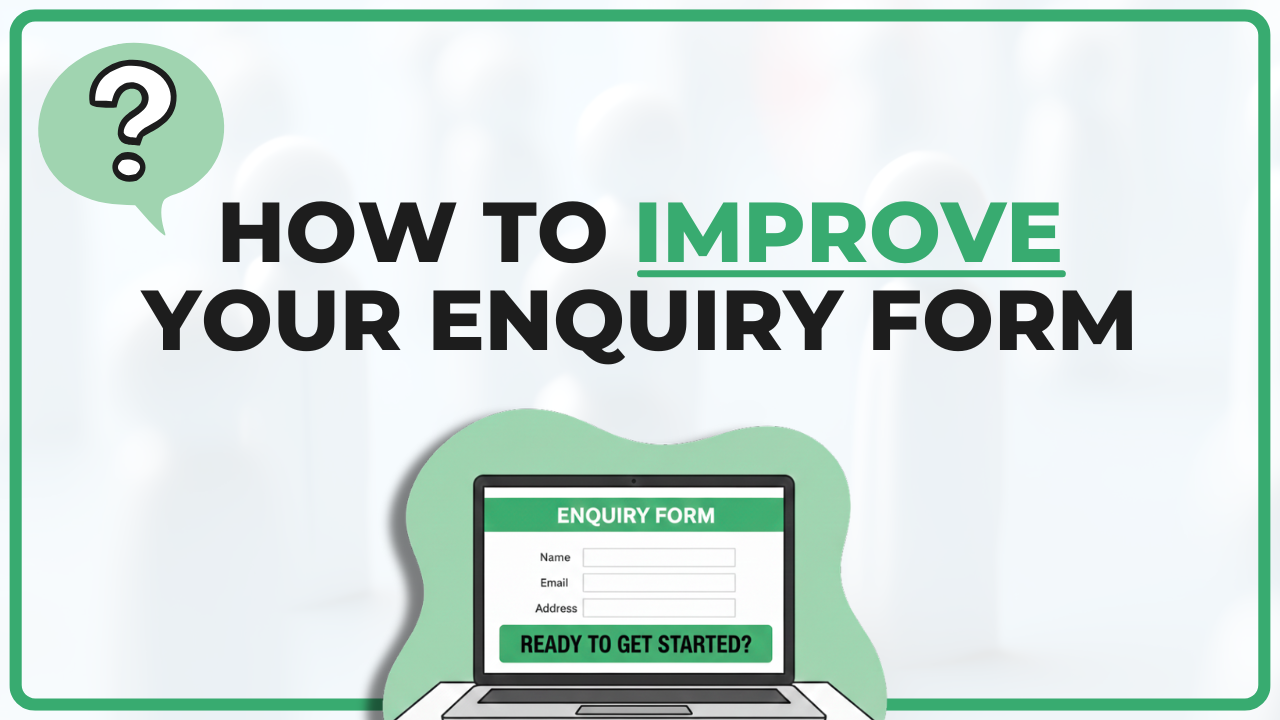
How to Improve Your Enquiry Form
Websites rarely lose enquiries because visitors are confused. They lose enquiries when visitors hesitate. We’ll be going through how to improve your enquiry form below.
Hesitation breaks momentum. Momentum is what turns interest into action. Every page on your website quietly asks the same question:
“What should I do next?“
For many websites, the answer comes too late or feels too difficult. The enquiry form becomes a barrier instead of a bridge.
Improving your enquiry form is not about adding more fields or collecting more information. It is about reducing effort and making the next step feel easy.
Why Enquiry Form Often Fail
An enquiry form sits at the most important moment of the user journey. The visitor already has interest. They are considering reaching out.
This is where friction matters most. Common problems include:
- Too many required fields before any value is given
- Questions that feel intrusive too early
- Forms that look long or time-consuming
- Unclear expectations about what happens after submission
When effort feels high, people delay. When people delay, they leave. A form should not feel like a task. It should feel like progress.
The Role of Momentum in Lead Generation
Momentum is created when each step feels simple and logical. Visitors move from curiosity to confidence when the next action feels obvious.
An enquiry form should continue this flow, not interrupt it. When users arrive at a form, they should feel reassured that:
- They are in the right place
- The process will be quick
- The outcome is worth the effort
If the form introduces uncertainty, momentum disappears. Good websites maintain momentum by reducing decision-making at critical moments.
The Biggest Cause of Enquiry Form Abandonment: Friction
Friction is anything that slows a visitor down or makes them think twice. In enquiry forms, friction usually comes from three areas:
- Extra steps before value is clear
- Early requests for commitment or detailed information
- Multiple choices competing for attention
Asking for budgets, timelines, or detailed project descriptions too early can create pressure. Visitors may not be ready to commit at that stage.
Reducing friction does not mean reducing quality. It means asking only what is necessary to begin the conversation.
How to Improve Your Enquiry Form
Improving performance often comes down to small adjustments rather than major redesigns. Focus on making the process feel light and straightforward.
1. Keep the Enquiry Form Short and Focused
Only ask for essential information at the first step. Name, contact details, and a simple message are often enough to begin. Additional details can be gathered later once the conversation has started. Shorter forms reduce perceived effort and increase completion rates.
2. Make the Next Step Clear
Visitors should know exactly what happens after submission. Will they receive a reply within 24 hours? Book a call? Receive pricing information? Clear expectations remove uncertainty and build trust.
3. Reduce Decision Fatigue
Avoid too many dropdown options or complicated choices. Each decision slows momentum. The goal is to guide users forward, not make them analyse options.
4. Use Clear, Reassuring Language
Small wording changes can have a large impact. Instead of “Submit,” use language that reinforces value, such as:
- Request a quote
- Start your project
- Get in touch
This makes the action feel purposeful rather than administrative.
Design Should Make Action Feel Easy
An enquiry form is not just a functional element. It is part of the overall experience. Spacing, layout, and visual hierarchy all influence behaviour. A cluttered or intimidating form increases hesitation, even if the questions are simple.
Good design reduces effort. Great design removes the need to think about the process at all. Visitors should move through the form naturally, without stopping to question what comes next.
Small Changes Create Large Results
Many businesses focus on increasing traffic when the real opportunity lies in improving conversion. A small reduction in friction can lead to significant increases in enquiries. When forms feel simple and approachable, more visitors complete them.
Design is not about making a website look impressive. It is about making action feel effortless. Every enquiry form asks a visitor for trust. The easier that step feels, the more likely it is to happen.
If your enquiry form feels heavy, complicated, or unclear, visitors will hesitate. When hesitation appears, momentum disappears. The best-performing websites remove friction and make the next step obvious. When the process feels easy, enquiries follow naturally.
Ready to improve your enquiry form and turn visitors into clients? Explore our Website Design and Redesign Services today and see how we can help your business convert more leads.
Article by Jedidiah.